Dreaming about a quiet homesite in Southern Vermont is the easy part. The harder part is figuring out whether that beautiful parcel can actually support the retreat you have in mind. If you are looking for land near Stratton, Manchester, Dorset, Peru, Weston, Londonderry, Jamaica, Winhall, or nearby towns, a little upfront diligence can save you time, money, and frustration later. Let’s dive in.
Start With Buildability, Not Just Beauty
When you buy land in Southern Vermont for a future retreat, the first question is not just whether the setting feels right. It is whether the parcel can legally and practically support your plan.
Two properties may look similar online, but local zoning and subdivision rules can make them very different in real life. A parcel with mountain views, privacy, and a good location may still have limits on where you can build, how many structures are allowed, or whether it can be divided in the future.
Review Local Zoning Early
Vermont municipalities regulate land development through local zoning and subdivision bylaws. These rules can govern land use, structure placement, size, and district-specific standards.
That means you should review the current zoning map, applicable district rules, and any overlay or hazard districts before assuming a parcel works for your retreat goals. If you are thinking about a guest house, barn, garage, or future compound layout, those details matter from the start.
Why Similar Parcels Can Have Different Limits
A listing map rarely tells the full story. One parcel may fall in a district with straightforward residential use, while another may sit in an area with stricter dimensional standards, access concerns, or subdivision review.
This is especially important if you are buying for long-term flexibility. If you want the option to create a multi-structure retreat or divide land later, subdivision bylaws can shape what is possible.
Understand Act 250 and Larger-Site Planning
For some buyers, the vision goes beyond a single cabin or home. You may be thinking about a family compound, a larger estate, or a parcel that could evolve over time.
In Vermont, a parcel’s location can affect whether a project is exempt from Act 250 review or subject to additional approval paths. For larger sites, it makes sense to confirm early whether road layout, subdivision plans, or elevation could trigger added review.
Why the Site Plan Matters
With land, the layout is part of the value. A road plan, building envelope, and future lot configuration can all affect how a project moves through the approval process.
That is why the right parcel is not always the one with the biggest acreage or the best first impression. It is the one that aligns with your intended use and has a realistic path forward.
Water and Wastewater Are Core Due Diligence Items
In Vermont, permits are generally required before subdividing land, constructing a new building or structure, or installing or modifying a potable water supply or wastewater system. For raw land, that makes water and septic feasibility a major part of the buying decision.
The design portion of a permit application must be certified by a licensed designer or engineer. In practical terms, this means it is smart to bring in the right site professionals early, not after you fall in love with the land.
Septic Design Should Happen Early
Many buyers assume septic is something to handle later. In reality, the location of a viable septic field can shape where you build, how you place a driveway, and how much usable outdoor space you really have.
A parcel that feels expansive may have a much smaller practical building area once soils, slopes, setbacks, and wastewater design are factored in. That is why early review can be so valuable.
Well Testing Matters Too
If your future retreat will rely on a new groundwater source, Vermont requires testing before first use. Required testing includes arsenic, lead, uranium, gross alpha radiation, total coliform bacteria, nitrate and nitrite, fluoride, manganese, and any other regionally required parameters.
For buyers, this means water quality is not a minor box to check at the end. It is part of understanding the parcel from the beginning.
Access Can Change the Whole Plan
A beautiful homesite still needs workable access. In Vermont, a written permit is required to develop or construct a driveway, entrance, or approach in a state highway right-of-way, while town highway access is handled by the municipality or its designee.
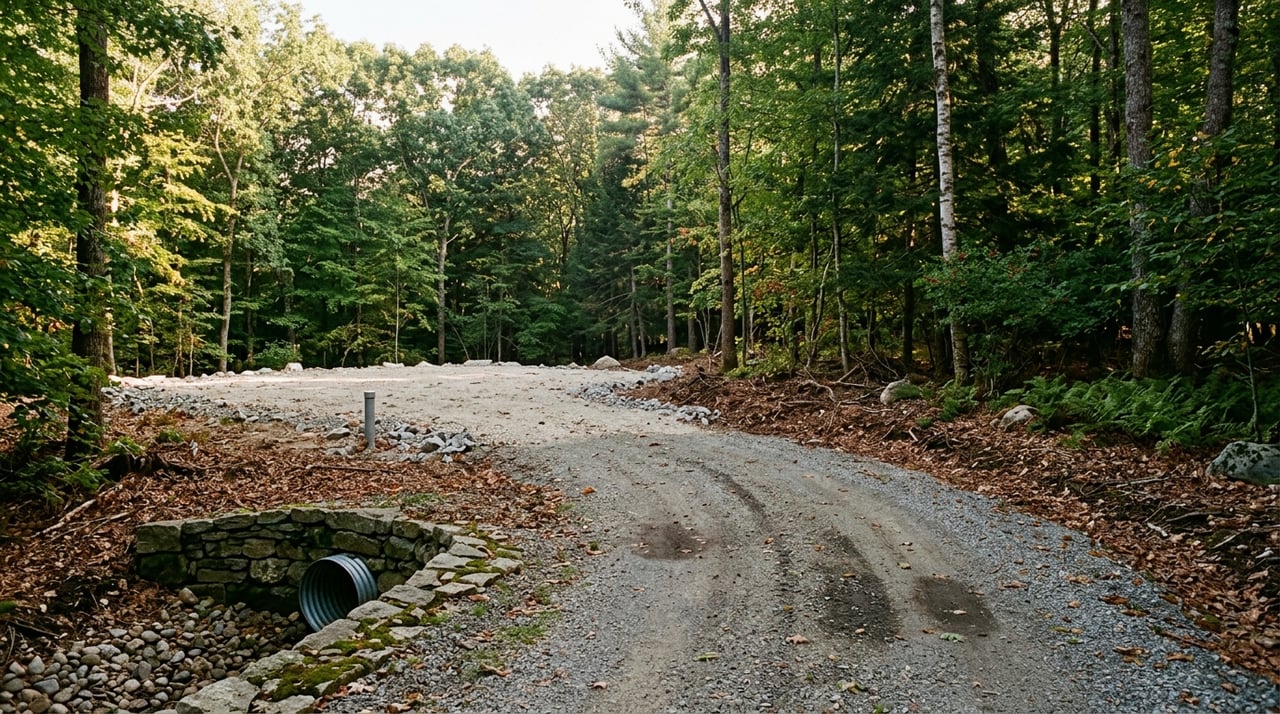
This is one of the most common issues buyers overlook. If a parcel needs a long private drive, shared access, or a more complex entrance design, the road plan itself can affect timing, cost, and permitting.
Driveway Placement Is More Than Convenience
Access is not just about where you turn in from the road. It can also influence site design, clearing needs, and how easily the parcel supports your long-term vision.
In some cases, the state may require access changes or a common frontage road as nearby land develops. That makes early planning especially important if you are buying in an area where future development patterns could matter.
Screen for Wetlands and Flood Hazards
Southern Vermont land can be scenic, wooded, and private, but natural features often shape what can be built. Wetlands, flood hazard areas, steep slopes, and setback constraints can all affect the usable portion of a parcel.
Vermont’s mapping tools are helpful screening resources, but they are not substitutes for field review. The state notes that wetland map boundaries are inaccurate and must be verified in the field, even though about 93% of mapped areas are confirmed wetlands when field-verified.
Maps Are a Starting Point, Not the Final Answer
A parcel may look clean and simple on a listing map and still have real development constraints. Wetlands, flood layers, and topography can change where a home, driveway, septic system, or accessory structure can go.
That is why a site walk, map review, soils work, and preliminary design conversation often tell you much more than the marketing photos do. The goal is not to avoid every challenge. It is to understand them before you buy.
Resort Proximity Can Help, But Usability Comes First
For many buyers, Southern Vermont’s appeal is tied to four-season recreation. Areas near Stratton, Okemo, and Mount Snow attract interest because these destinations promote year-round activities, not just winter use.
That can support demand for future retreat properties. Still, resort proximity only adds meaningful value when the parcel itself is usable and the surrounding market supports a premium.
What Research Suggests About Value
Academic research shows that proximity to ski resorts can influence land values, but not in a simple or uniform way. One study found that land closer to ski resorts tended to command higher per-acre prices, while larger parcels often had lower per-acre pricing.
Other research found no statistically significant effect from ski-resort count or snowfall on median home prices in a sample of Northeastern ski towns, and it found a negative effect on average price per square foot in that sample. The takeaway is clear: location helps, but feasibility and market context matter more.
A Smart Buying Checklist for Vermont Land
If you are considering land for a future retreat, these are the issues worth reviewing before you move forward:
- Current zoning district and applicable bylaws
- Subdivision rules and future division potential
- Any overlay, hazard, or special review districts
- Water and wastewater permit path
- Septic design feasibility and likely field location
- Groundwater testing requirements for a new source
- Driveway and access approval needs
- Wetlands screening and field verification
- Flood hazard review
- Slope, setbacks, and realistic building envelope
- How the parcel’s layout fits your long-term goals
Why Local Guidance Matters in Southern Vermont
Buying land in this part of Vermont is rarely just a land purchase. It is often a lifestyle decision tied to ski access, privacy, long weekends, family use, and future plans.
At the same time, land value here is shaped by practical details that do not always show up in a listing description. In resort-oriented markets, local knowledge can help you sort out which parcels are truly promising and which ones may look better on paper than they perform in practice.
Think Long Term Before You Buy
The best retreat parcels balance setting, usability, and flexibility. You want land that fits your vision now, while also supporting how you may want to use it years from today.
That could mean preserving privacy, planning for accessory structures, or choosing a site that keeps future options open. In Southern Vermont, those decisions are strongest when they start with careful review, not assumptions.
If you are weighing land opportunities near Stratton or elsewhere in Southern Vermont, Wohler Realty Group can help you evaluate the local market with a practical, property-specific lens.
FAQs
What should you check before buying land in Southern Vermont?
- You should review zoning, subdivision rules, water and wastewater feasibility, access, wetlands, flood hazards, slopes, setbacks, and the parcel’s realistic building envelope.
Does Vermont require permits for water and wastewater systems on raw land?
- Yes. Vermont generally requires a permit before subdividing land, constructing a new building or structure, or installing or modifying a potable water supply or wastewater system.
Why is access important when buying Vermont land?
- Access matters because driveway and entrance approvals can affect site design, permitting, cost, and whether the parcel works for your intended retreat layout.
Are Vermont wetland maps enough to confirm buildability?
- No. Vermont’s screening maps are useful starting points, but wetland boundaries must be verified in the field.
Does being near a ski resort increase Southern Vermont land value?
- It can, but not always. Research suggests resort proximity may support value in some cases, yet the parcel’s usability and the local market still play the biggest roles.